SCHOOL FOR THE ENVIRONMENTAL Microplastics All Around Us
Students in researching microplastics in seawater, soil and beach sand, analysing environmental data and sharing their findings with the wider community.
SCHOOL FOR THE ENVIRONMENTAL We have been implementing the programme for 50 years, with the aim of involving students in contemporary ways of acquiring knowledge. The relationship between PEOPLE AND THE ENVIRONMENT can best be studied through students’ own research. The purpose of this approach is to develop the ability to observe and analyse changes in natural processes. Information presented to students in regular classes as ready-made facts is replaced by methods based on observing and comparing changes in nature. An interdisciplinary approach enables a better understanding of and easier solutions to problems. By participating in this programme, students have the opportunity to understand what human beings have done to nature and, consequently, to recognise the importance of their own role in environmental protection.
Project objectives
• To provide students with contemporary ways of acquiring knowledge and developing self-directed learning skills as a basis for successful further education or employment.
• To enable students to independently evaluate the results they have achieved.
• To enable students to present the results of their work to the wider community.
• To involve as many interested students as possible in order to raise environmental awareness among young people.
• To bring students closer to nature so that they understand the importance of protecting and preserving natural heritage.
• To introduce students to various technologies and help them understand that coexistence between technology and nature is possible.
• To enable students to conduct fieldwork and acquire knowledge through research.
• To connect students with the wider world through international projects, enabling them to understand the global importance of environmental protection through the exchange of data.
• To enable students to spend their free time in a meaningful way through socially beneficial activities.
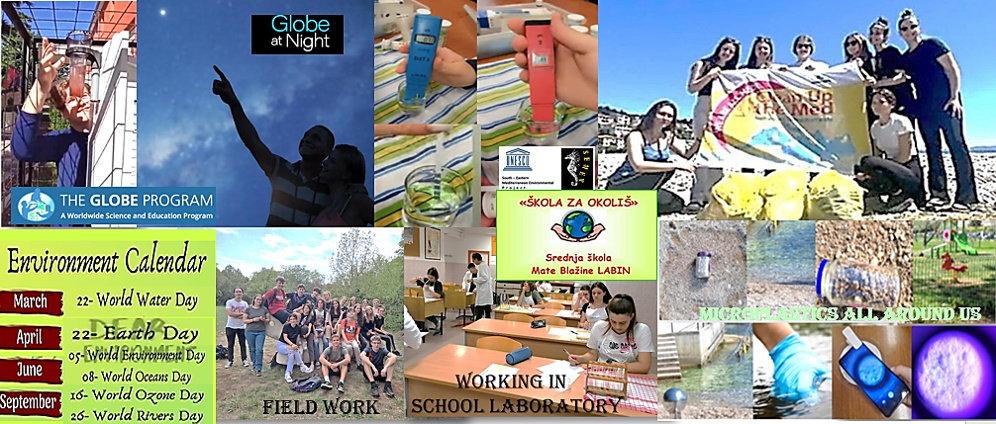
Activities and methods Each year, in addition to ongoing international projects and environmental actions, a new programme topic is planned and implemented throughout the year.The programme uses:
• project-based learning applying an interdisciplinary approach;
• teamwork and collaborative work;
• practical fieldwork and laboratory work at school;
• cooperation with relevant institutions in educating participants (VODOVOD Labin, the Institute of Public Health of Istria County, etc.).
Programme plan for the 2026/2027 school year
1. EDUCATION OF NEW MEMBERS FOR INTERNATIONAL PROGRAMS- teachers and students – September 26.
2. WORK IN INTERNATIONAL PROGRAMS
a. THE GLOBE PROGRAM, www.globe.gov, monitoring of weather conditions, state of water, air, soil and cover in Labinština. - continuously
b. GLOBE AT NIGHT PROGRAM, www.globeatnight.org, monitoring the magnitude of light pollution 2. d0 September 11 SAGITTARIUS, October 2 to 11 PEGASUS.
c. UNESCO SEMEP PROGRAM, semep.cnbs.ro/about-unesco-semep/, monitoring sea water quality in Rabac. – continuously
d. CLEAN UP THE MED, www.legambiente.it/clean-up-the-med-en/ Monitoring of waste types and beach cleaning in Rabac.- April and May 27.
3. COMMEMORATION OF IMPORTANT DATES
Activities will also be organised to mark important environmental dates, including World Water Day, Earth Day, the International Day for Biological Diversity and World Environment Day. Activities are planned together with students and focus on topics relevant to the local environment.
4. PROGRAMME TOPIC for the 2026/2027 school year
Microplastics all around us – September 26 to May 27. This work investigates the presence of microplastics in sand, soil and seawater using simple methods available to schools. The results confirm the presence of microplastics and show seasonal differences.
Description of the participants involved in the project
Approximately 100 students of different fields of study and age groups are directly involved each year. Through the programme activities, all other students at the school are also indirectly involved. The local government is directly involved by supporting the programme and using the programme results. Businesses are involved through cooperation and assistance in implementing the programme.
Expected results
Participation in the programmes and projects we are involved in brings great satisfaction to both teachers and students. Students emphasise that this way of learning is rewarding because they are involved in teamwork, collaborate with teachers and work with scientists from around the world. This enables them to acquire knowledge and develop their own skills.
Project monitoring and evaluation
The programme is evaluated by the participants as well as through the notable results achieved by our members at national and international competitions and showcases.
Project sustainability
This way of working has so far demonstrated very good results. In particular, it encourages a large number of interested students and promotes good cooperation with the local community and businesses. We therefore believe in the value and future of the programme.
ŠKOLA ZA OKOLIŠ Program provodimo 50. g. s ciljem uključivanja učenika u suvremene načine stjecanja znanja . Odnos ČOVJEK–OKOLIŠ najbolje se može proučiti na osnovu vlastitog istraživanja. Svrha je takvog pristupa razvijati sposobnosti uočavanja i raščlanjivanja promjena u prirodnim procesima. Informacije koje su učenicima u okviru redovne nastave predočene kao gotove činjenice zamijenjene su metodom promatranja, uspoređivanja promjena u prirodi, a interdisciplinaran pristup omogućuje bolje razumijevanje i lakše rješavanje problema. Učenici su učešćem u ovom programu u mogućnosti spoznati što je čovjek učinio prirodi, kako bi shvatili važnost svoje uloge u zaštiti okoliša.
Cilj projekta
• Omogućiti učenicima suvremene načine za stjecanje znanja i samoobrazovanje kao pretpostavku njihovog uspješnog studija ili rada.
• Omogućiti učenicima da sami vrednuju postignute rezultate.
• Omogućiti učenicima da rezultate svoga rada prezentiraju široj društvenoj zajednici
• Uključiti što više zainteresiranih učenika kako bi senzibilizirali ekološku svijest kod mladih ljudi.
• Približiti učenike prirodi kako bi shvatili važnost zaštite i očuvanja prirodne baštine.
• Približiti učenicima razne tehnologije kako bi shvatili da je moguće ostvariti suživot tehnologije i prirode.
• Omogućiti učenicima rad na terenu kako bi istraživanjima stjecali znanja.
• Omogućiti učenicima vezu sa svijetom (međunarodni projekti) kako bi razmjenom podataka shvatili važnost očuvanja okoliša globalno.
• Omogućiti učenicima kvalitetno provođenje slobodnog vremena u okviru društveno korisnog rada.
Aktivnosti i metode
Svake godine se planira uz stalne međunarodne projekte i ekološke akcije nova programska tema koja se realizira kroz jednu godinu. Program koristi:
• Projektnu nastava koja primjenjuje interdisciplinaran pristup.
• Timski i suradnički rad.
• Praktičan rad na terenu i u školskom laboratoriju.
• Suradnja na edukaciji sudionika u relevantnim institucijama (VODOVOD Labin, ZZJZ Istarske županije….)
Plan za šk.god. 2026./2027.
1. EDUKACIJA NOVIH ČLANOVA ZA MEĐUNARODNE PROGRAME nastavnici i učenici – rujan 26.
2. RAD U MEĐUNARODNIM PROGRAMIMA
a. THE GLOBE PROGRAM, www.globe.gov, praćenje meteo uvjeta, stanje voda, zraka, tla i pokrova na Labinštini. - kontinuirano
b. GLOBE AT NIGHT PROGRAM, www.globeatnight.org , praćenje magnituda svjetlosnog onečišćenja 2. d0 11. rujna STRIJELAC, 2. do 11. listopada PEGAZ.
c. UNESCO SEMEP PROGRAM, semep.cnbs.ro/about-unesco-semep/ , praćenje kvalitete morske vode u Rapcu. - kontinuirano
d. CLEAN UP THE MED, www.legambiente.it/clean-up-the-med-en/
,monitoring vrste otpada i čišćenje plaža u Rapcu.- travanj i svibanj 27.
3. OBILJEŽAVANJE ZNAČAJNIH DATUMA: Svjetski dan voda, Dan planete Zemlje, Međunarodni dan bioraznolikosti, Svjetski dan zaštite okoliša….
Svake godine se za pojedino obilježavanje planiraju aktivnosti u dogovoru s učenicima i prema zadanim temama od važnosti za naš okoliš.
4. PROGRAMSKA TEMA za šk.god. 2026./2027. Mikroplastika svuda oko nas – rujan 26. do svibanj 27. Ovaj rad istražuje prisutnost mikroplastike u pijesku, tlu i morskoj vodi koristeći jednostavne metode dostupne školama. Rezultati potvrđuju prisutnost mikroplastike te pokazuju sezonske razlike.
Opis korisnika uključenih u projekt
Godišnje je izravno uključeno 100-tinjak učenika svih struka i uzrasta. Kroz programske aktivnosti neizravno su u program uključeni i svi ostali učenici škole.
Lokalna uprava je izravno uključena kroz potporu programu te korištenjem rezultata programa. Gospodarski subjekti su uključeni kroz suradnju i pomoć u realizaciji programa.
Očekivani rezultati
Rad u na programima i projektima u koje se uključujemo predstavlja veliko zadovoljstvo, kako nama učiteljima, tako i našim učenicima, koji ističu da im takav način učenja predstavlja zadovoljstvo jer su uključeni u timski rad, surađuju s profesorima, surađuju s znanstvenicima iz cijelog svijeta, što im omogućuje stjecanje znanja i razvijanje vlastitih sposobnosti.
Praćenje i vrednovanje projekta Program se vrednuje od strane sudionika a i zapaženim rezultatima koje naš članovi postižu na nacionalnim i međunarodnim natjecanjima i smotrama.
Održivost projekta
Ovakav način rada do sada je pokazao vrlo dobre rezultate, a posebno potiče velik broj zainteresiranih učenika i dobra suradnja sa lokalnom zajednicom i gospodarskim subjektima, pa vjerujemo u njegovu opravdanost i budućnost.


