
UPCOMING ESDN EVENTS
ESDN Conference 2024 will be taking place in Brussels, Belgium on 05-06 June 2024!
The ESDN is happy to announce that the ESDN Conference 2024 will be taking place in Brussels, Belgium on 05-06 June 2024! The title of this year’s Conference is “Upgrading Europe: Building Transformative Policies to Reach the Sustainable Development Goals”. The ESDN is organizing the Conference in cooperation with the Belgian Federal Institute for Sustainable Development and the European Economic and Social Committee. The Conference will be an official event of Belgium’s EU Council Presidency.
As we find ourselves just over the halfway point to reaching the 2030 Agenda and the SDGs, with only six more years left, the ESDN and co-organizers will focus this year’s Conference on transformative policies. The Global Sustainable Development Reports (2019 and 2023) have identified the entry points to transformational change. The purpose of this Conference is to learn more about transformations and how to bring them about, as well as learn from good practice cases from national governments, local governments, the business sector, academia, and science. The Conference will offer ample opportunities for discussions, networking, and information exchanges with colleagues from all parts of Europe.
More information on the Conference, including the draft agenda, can be found here
The 9th ESDN Peer Learning Platform will be taking place in the second half of the year in Bucharest, Romania!
The 9th ESDN Peer Learning Platform will take place in the second half of 2024 in Bucharest, Romania! The topic of the Peer Learning Platform with be Culture and Sustainable Development.
Please stay tuned over the upcoming weeks and months to learn more about this event!
Recent ESDN Events
ESDN Young Civil Servant Workshop will take place on 15-16 April 2024 in Vienna, Austria!
The ESDN organized its first ever Young Civil Servant Workshop, which took place in Vienna on the 15th and 16th of April 2024 and focused on Transformative Policies, especially regarding the aspect of Intergenerational Equity.
The Sustainable Development Goals envisage a planet inhabitable not only for the present, but also for the future and are therefore inherently linked to the wellbeing of different generations. The workshop in Vienna will look at the area of transformative policies from an intergenerational equity perspective. What are the main challenges in this regard? How can we use intergenerational equity as a resource in policymaking? To what extent are the SDGs providing and supporting intergenerational equity and (how) can this be elevated in a post-2030 policy framework? What can young civil servants do to support this process? These questions will guide us through an interesting and exciting 1.5 days with inputs from experts, as well as a lot of time to exchange and develop ideas together.
The Workshop brought together around 25 young civil servants from around Europe, aged 35 or younger, to learn and discuss on the topic of intergenerational equity.
The Workshop agenda and Discussion Paper can be found here
The Workshop Policy Note will be available in a couple of weeks.
22nd ESDN Workshop took place on 26-27 March 2024 in Budva, Montenegro!
The 22nd ESDN Workshop took place on 26-27 March 2024 in Budva, Montenegro! The topic was “Governance Transformations for More Effective SDG Implementation”. The Workshop was organized in cooperation with the Government of Montenegro and UNDP Montenegro.
Day 1 of the Workshop began on the 26th of March and focused on what some Western Balkan countries have been doing regarding implementing the 2030 Agenda and the Sustainable Development Goals, with a focus on institutional mechanisms and frameworks. This was complemented by keynote presentations of good practices from around Europe on governance mechanisms and experiences in implementation. In typical ESDN Workshop fashion, participants were also able to work in interactive groups to further exchange on the keynote presentations, their own experiences with implementation, and further learn from, and discuss with, one another.
Day 2 of the Workshop began on the 27th of March and focused on governing transformations towards sustainability, as well as focused on deriving answers to the question of what is needed to be fit for the future. The Workshop culminated in a final interactive exchange that focused on participants developing a toolbox for effective SDG governance for the future.
More information about the Workshop, including the agenda and Discussion Paper can be found here
The ESDN Policy Note will be available soon.
Explained
The European Sustainable Development Network (ESDN) is a network of public administrators and other experts dealing with sustainable development (SD) in Europe.
European
The ESDN has been bringing together European policymakers and public servants in the field of sustainable development since 2002. Over the course of the Network's history, it has expanded to include more policymakers, scientists and practitioners from all over Europe.
Sustainable
The ESDN subscribes to the principles of Sustainable Development and the United Nations' 2030 Agenda for Sustainable Development and the 17 Sustainable Development Goals (SDGs).
DEVELOPMENT
Sustainable Development satisfies the needs of the present without compromising those of future generations. It strives to achieve a balance between economic, social and ecological aspects.
Network
As a Network of public servants and policymakers, the ESDN facilitates an active exchange of ideas and best practices to make sustainable development strategies more effective.
Country profiles
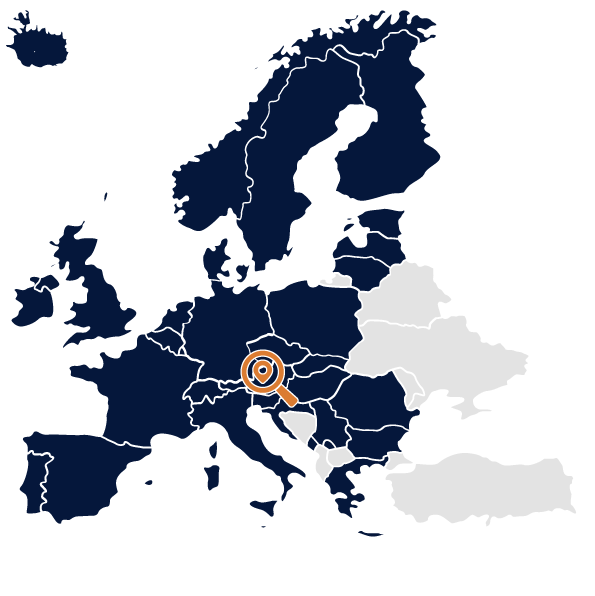
This section gives a brief overview of selected SD strategy features for 33 European countries.